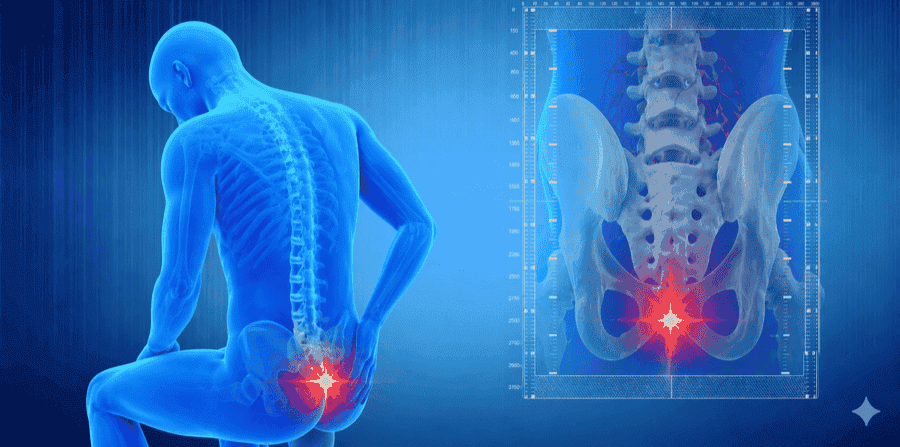
Do you feel pain at the bottom of your spine when sitting, standing up, driving, or after sitting for a long time? Many people search online using terms like “tailbone pain when sitting,” “pain near butt bone,” “pain at the end of spine,” “lower back pain while sitting,” or “tailbone pain after falling.” Tailbone pain is a very common condition affecting office workers, students, drivers, gym-goers, mothers after childbirth, and people with prolonged sitting habits.
In busy cities like Colombo and Dehiwala, long working hours, desk jobs, commuting, and sedentary lifestyles are increasingly contributing to posture-related pain and spinal discomfort. At Physio Medicare, physiotherapists commonly treat individuals experiencing tailbone pain related to prolonged sitting, poor posture, muscle tightness, injury, and movement dysfunction.
Tailbone pain usually occurs around the small bone at the end of the spine, known as the coccyx. The pain may develop after a fall, injury, gym workout, cycling, prolonged sitting, pregnancy, childbirth, or poor sitting posture. Some people experience a dull ache, while others feel sharp pain when getting up from a chair or sitting on hard surfaces.
Many people normalize daily pain until it begins affecting sleep, work performance, travel, exercise, and overall quality of life. Early assessment and proper management can help prevent long-term discomfort and recurring pain episodes.
Common Symptoms of Tailbone Pain
People commonly search for symptoms such as:
- Pain when sitting for a long time
- Pain while getting up from a chair
- Pain at the bottom of the spine
- Buttock pain while driving
- Tailbone pain during pregnancy
- Pain after slipping or falling
- Lower back and tailbone discomfort
- Pain while sitting on hard surfaces
- Sharp pain near the tailbone
- Pain after long office work
- Tailbone pain after gym exercises
What Causes Tailbone Pain?
Tailbone pain can happen for several reasons. Common causes include:
- Falls or direct injury to the tailbone
- Prolonged sitting on hard chairs
- Poor posture while working or studying
- Long driving hours
- Cycling-related pressure on the coccyx
- Pregnancy and childbirth-related strain
- Muscle tightness around the hips and pelvis
- Repetitive stress from gym workouts
- Weak core and pelvic muscles
- Sudden increase in sitting time
In many cases, poor posture and prolonged sitting increase pressure on the coccyx and surrounding muscles, leading to irritation and inflammation.
Who Is More Likely to Experience Tailbone Pain?
Tailbone pain can affect anyone, but it is more common among:
- Office workers
- Students
- Drivers
- People working from home
- Gym-goers
- Cyclists
- Pregnant and postpartum mothers
- Elderly individuals
- People with sedentary lifestyles
- Individuals recovering from falls or injuries
At Physio Medicare, many patients from Colombo and Dehiwala seek physiotherapy for posture-related tailbone pain caused by prolonged sitting and poor movement habits.
How Can You Relieve Tailbone Pain Naturally?
Simple lifestyle and posture changes may help reduce pain and improve comfort:
- Sit with proper posture
- Avoid slouching while sitting
- Use a soft cushion or coccyx cushion
- Avoid sitting continuously for long periods
- Take standing and walking breaks regularly
- Stretch the lower back, hips, and pelvic muscles
- Improve workstation ergonomics
- Avoid sitting on hard surfaces
- Maintain regular movement and exercise
Gentle movement and posture correction are often important parts of recovery.
How Does Physiotherapy Help Tailbone Pain?
Physiotherapy can help improve pain, posture, movement, and muscle balance without depending only on medication. Treatment approaches may include:
- Posture correction
- Soft tissue release and manual therapy
- Mobility and stretching exercises
- Core strengthening exercises
- Pelvic stability exercises
- Ergonomic advice for sitting and work setups
- Movement retraining
- Pain management techniques
With evidence-based physiotherapy and rehabilitation experience in Sri Lanka, Physio Medicare focuses on individualized treatment plans designed to improve movement quality, reduce pain, and support long-term recovery.
When Should You See a Physiotherapist for Tailbone Pain?
You should seek professional assessment if:
- Pain lasts more than 1–2 weeks
- Sitting becomes difficult
- Pain keeps returning
- Pain becomes severe after a fall or injury
- You experience numbness or tingling
- Pain affects sleep or work performance
- Standing up from a chair becomes painful
- Daily activities become uncomfortable
Early treatment can help prevent chronic pain and improve recovery outcomes.
Frequently Asked Questions About Tailbone Pain
Why does my tailbone hurt when sitting?
Tailbone pain while sitting is commonly caused by prolonged pressure on the coccyx, poor posture, muscle tightness, injury, or prolonged sitting on hard surfaces.
Can physiotherapy help tailbone pain?
Yes. Physiotherapy can help reduce pain, improve mobility, correct posture, strengthen supporting muscles, and improve movement patterns contributing to tailbone discomfort.
How long does tailbone pain last?
Recovery time depends on the cause and severity of the condition. Mild cases may improve within weeks, while chronic pain may require longer rehabilitation and posture correction.
Is walking good for tailbone pain?
Gentle walking and regular movement are often helpful because prolonged sitting can worsen pressure around the tailbone area.
Can poor posture cause tailbone pain?
Yes. Poor posture and prolonged sitting can increase stress on the tailbone and surrounding muscles, leading to pain and discomfort.
Why does my tailbone hurt after pregnancy?
Pregnancy and childbirth can place stress on the pelvic region and coccyx, which may contribute to tailbone pain during the postpartum period.
What is the best treatment for tailbone pain?
Treatment depends on the underlying cause. Physiotherapy, posture correction, movement modification, stretching, strengthening, and ergonomic adjustments are commonly recommended.
Tailbone Pain and Daily Life
Many people ignore tailbone pain initially, especially when symptoms are mild. However, continuing poor posture, long sitting hours, and lack of movement can worsen the condition over time. Tailbone pain can eventually interfere with work, exercise, travel, driving, sleep, and daily comfort.
Understanding the cause early and taking proper care can help you return to comfortable sitting, working, and daily activities faster.
Get Professional Tailbone Pain Treatment in Dehiwala
If you are experiencing persistent tailbone pain, discomfort while sitting, posture-related pain, or lower back stiffness, the team at Physio Medicare can help assess the root cause and guide you through a personalized physiotherapy treatment plan focused on long-term recovery, posture improvement, and better movement.
You may also benefit from learning more about posture correction, ergonomics, sports injury rehabilitation, lower back pain management, and workplace physiotherapy support available through Physio Medicare.